Pillar 01 · The real world
A real place, surveyed by laser.
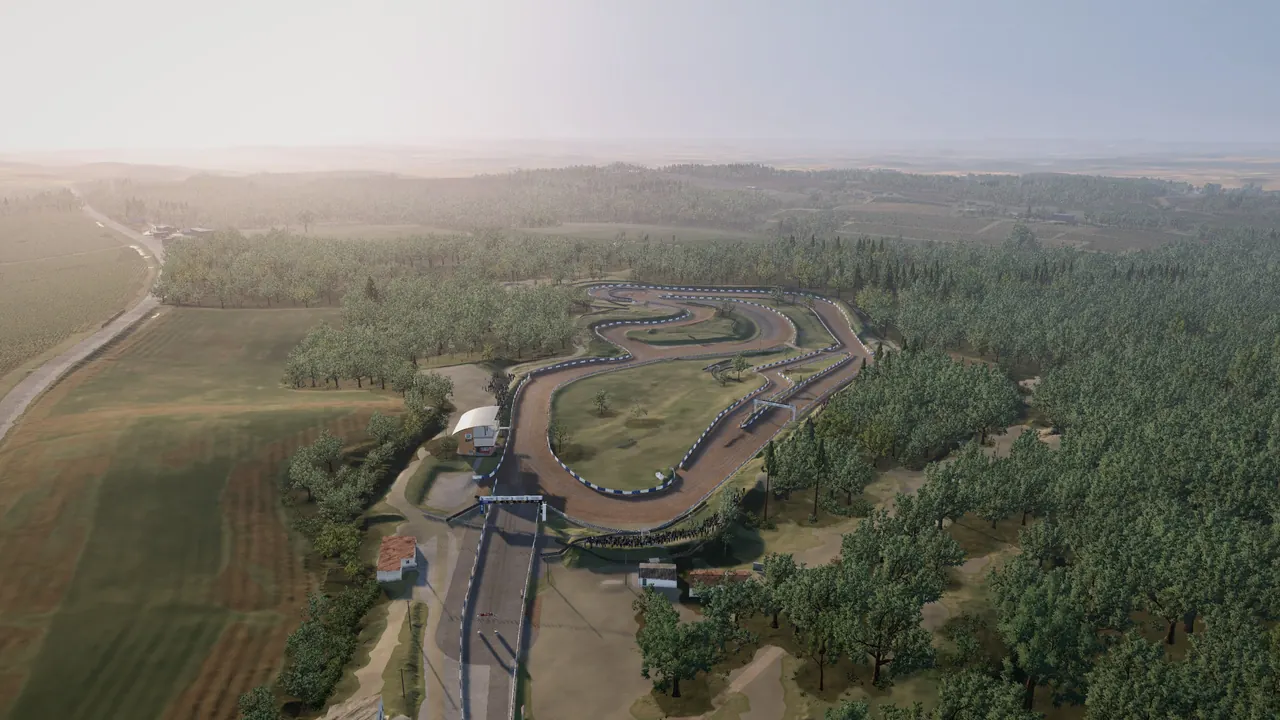
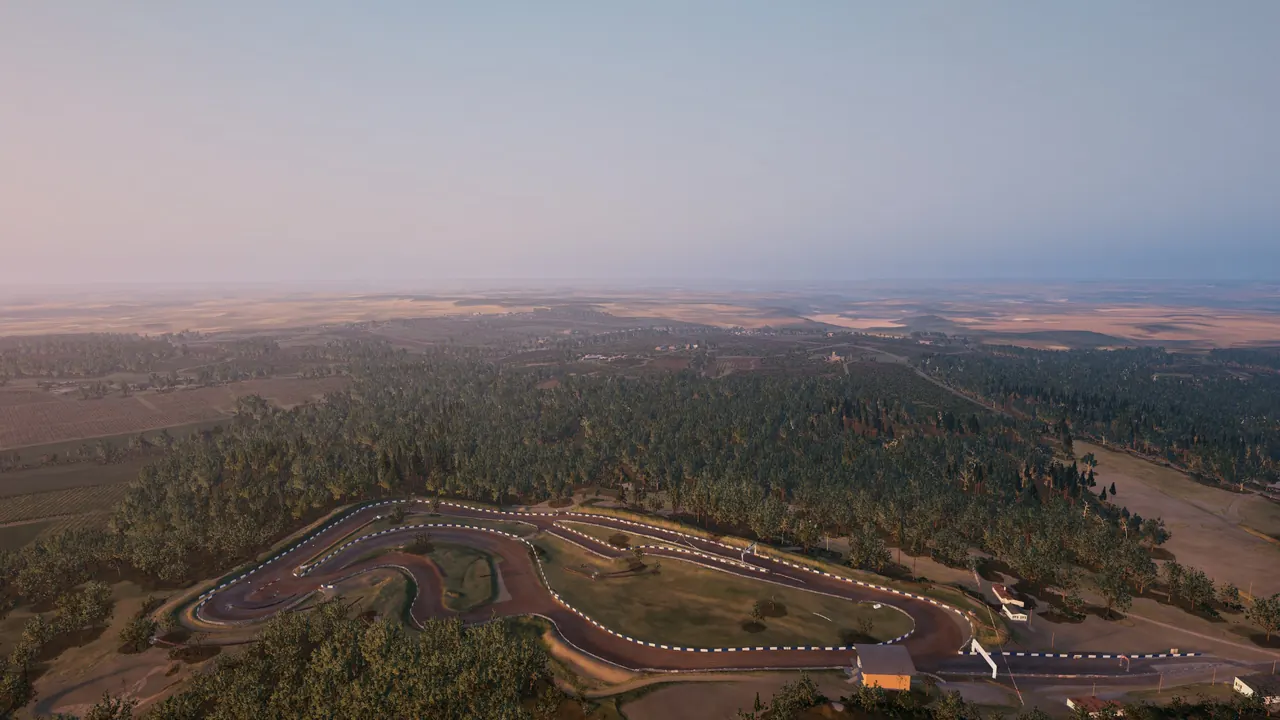
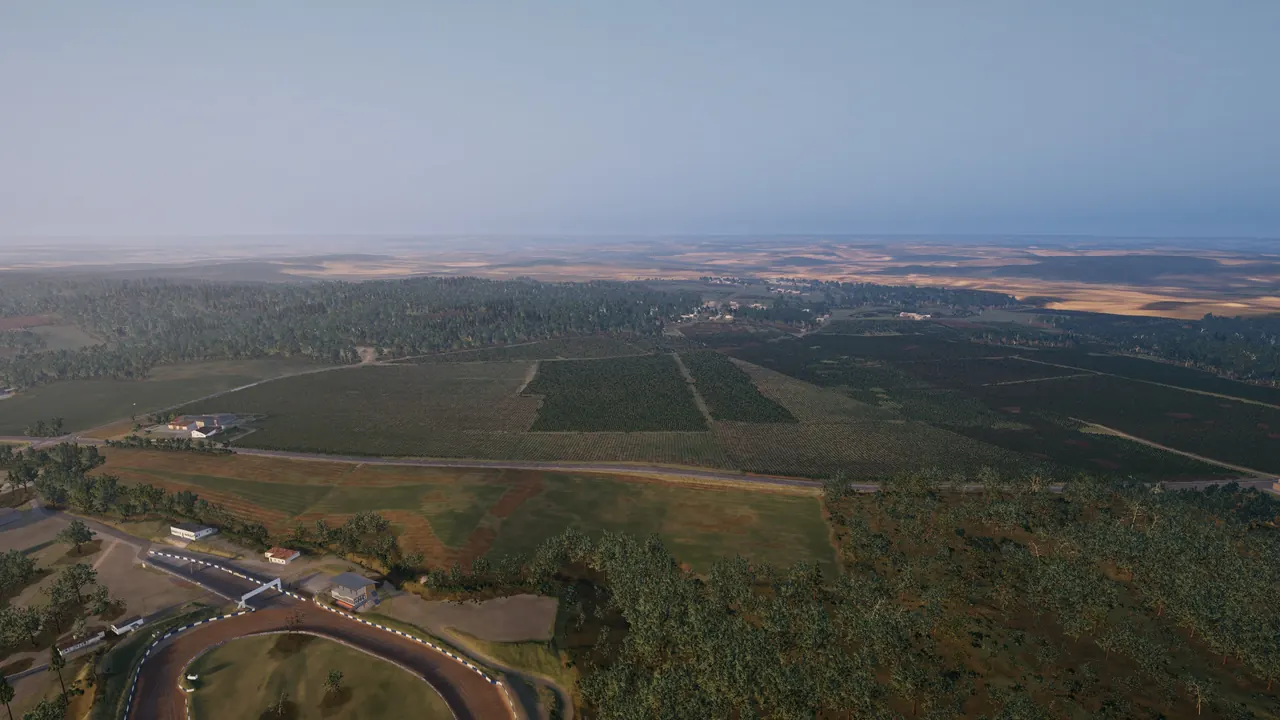
This is not a mock-up: these are 425,000 points of the real terrain at Faleyras, in south-west France, from the national LiDAR HD survey. The trees, the vineyards, the hill, the track.

Multi-discipline racing sim · Rallycross · Drift · Rally
Pick any place. The game builds it from LiDAR survey data. Lay out your rally stage, your rallycross circuit or your drift zone, then drive it with physics and force feedback that tell the truth, on every surface.
Two rare foundations. A real world you generate, shape and share. Physics built for dirt as much as for tarmac, and a wheel that lets you feel it.
Pillar 01 · The real world
This is not a mock-up: these are 425,000 points of the real terrain at Faleyras, in south-west France, from the national LiDAR HD survey. The trees, the vineyards, the hill, the track.
Step 1 · Generate
20 cm aerial photos, infrared, maps, tree species, buildings: the game reads open public data and builds the terrain, grip surfaces, grass, every tree and every row of vines on its own. In about a minute.
Step 2 · Choose
On the world map, you click squares. Each one generates, streams in, and joins its neighbours, out to a 20 km horizon.
Step 3 · Create
In the in-game Workshop: carve a circuit into the real terrain, or route a stage along real roads. Joker lap, time controls, pits, crowds, straw bales. One road, several disciplines: rallycross, rally, drift.
Step 4 · Drive
Published events are locked to their tiles: the server fetches them on its own, and lap times stay comparable as the world evolves. Public sharing and a shared world: Roadmap
Open data → playable world


Same 500 × 500 m area, north up: on the left the 20 cm IGN aerial photo, on the right a full-quality top-down view in the game (colour grading matched to the photo). Drag to compare.
The Workshop · in-game editor

A multi-discipline sim
It started with rallycross, the hardest discipline for a physics engine: tarmac and dirt in the same lap, in every corner. Master it first, and you cover the whole range of surfaces.
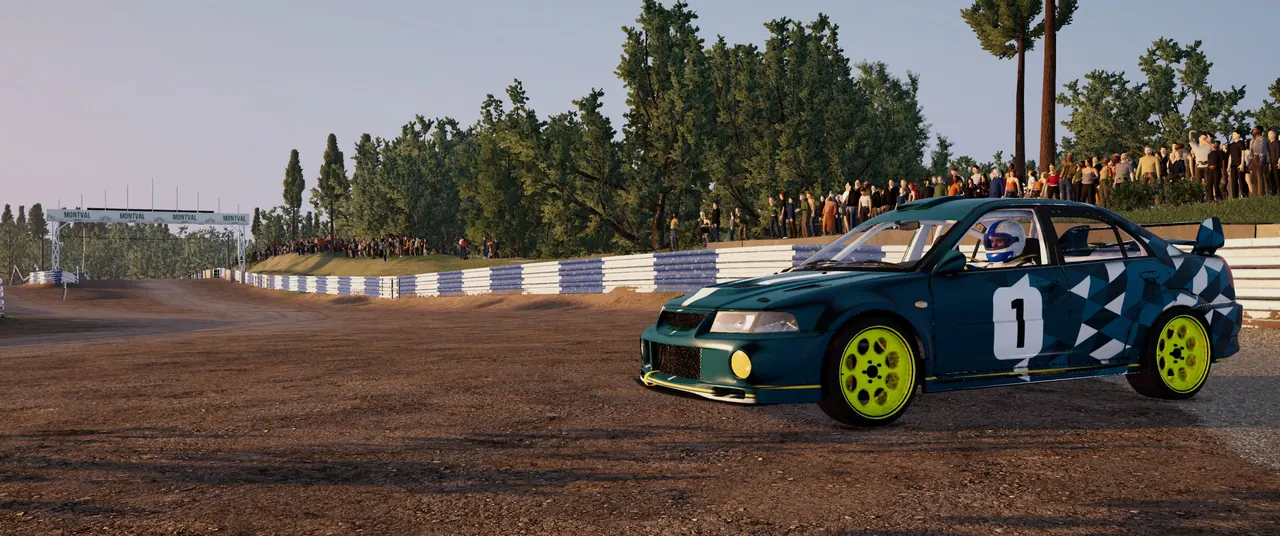
Where it all began, and the most complete discipline. A full online meeting: heats of 8, semi-finals, final. Regulation start with a random delay, joker lap, jump-start penalty.
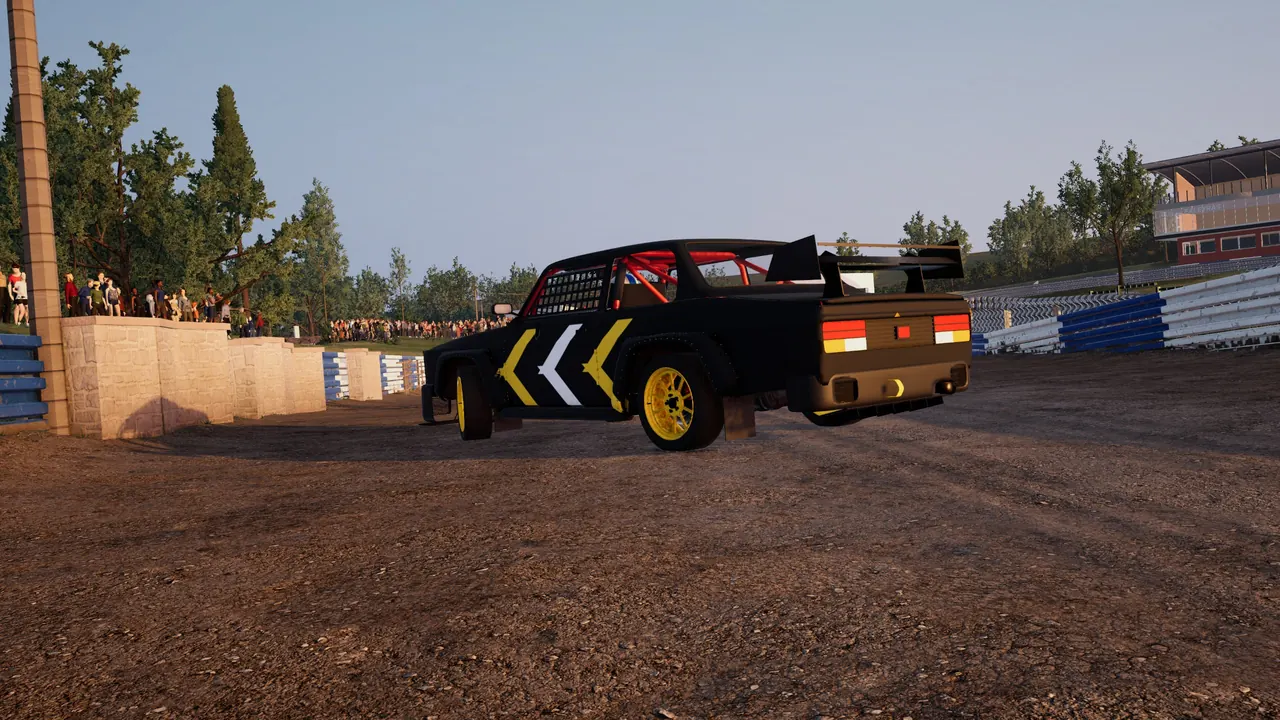
Scored sliding: angle, speed, combos up to ×4. Spin out and the current drift is lost. Your playground: car parks, mountain passes, dirt lanes, all straight from the real world.
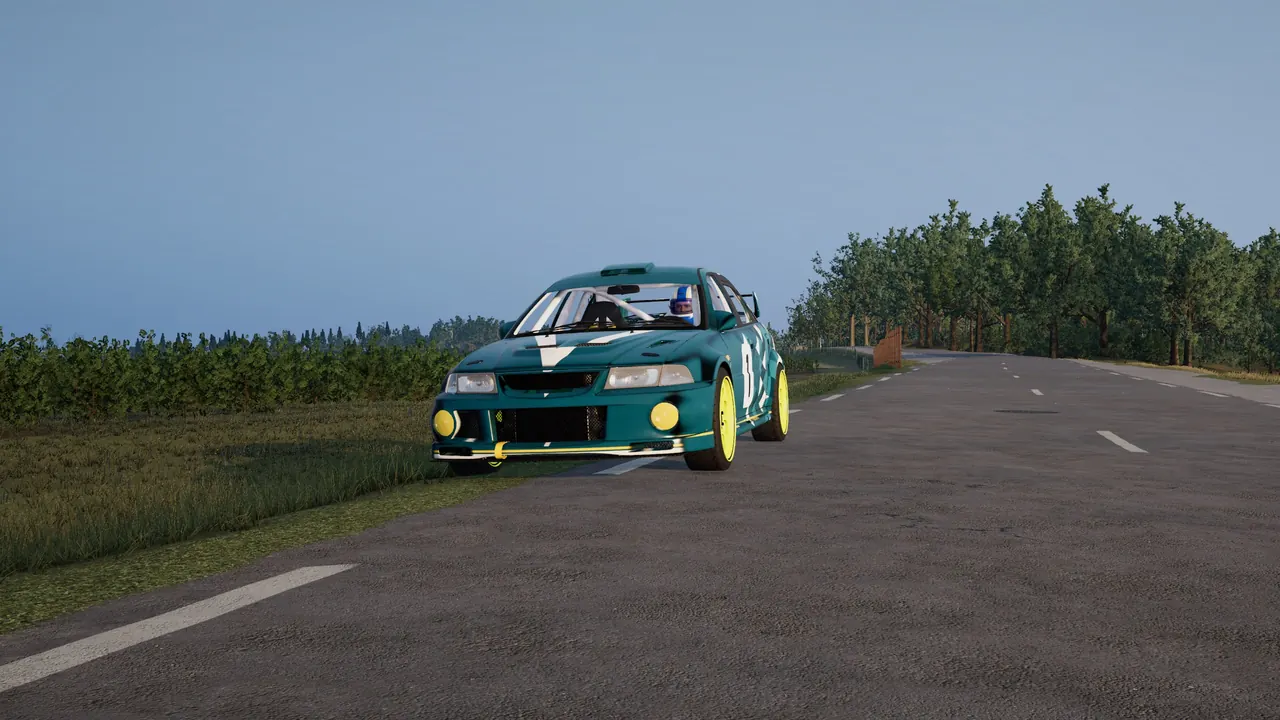
Two clicks on the map: the route follows the real road network, with its length, surfaces and elevation. One more click and the road becomes a special stage, with road sections and time controls.
Pit lane with speed limiter, timed hill climbs solo and on dedicated servers. Dedicated cars will follow.
Rally · the generated stage
Your clicks snap to the real road network. The preview shows the length, the share of tarmac, dirt and tracks, the total climb and the road names. Standing start, a split every kilometre, a finish gate sized to the road.
First test: the "Vallée de Munster" stage from the 2014 Rallye de France, rebuilt over 18.5 km, from 478 to 1,165 m above sea level. Its return to the tiled world: Roadmap
Pace notes, rally signage, long stages streamed seamlessly, online rally: Roadmap
Pillar 02 · NinjaPhysics
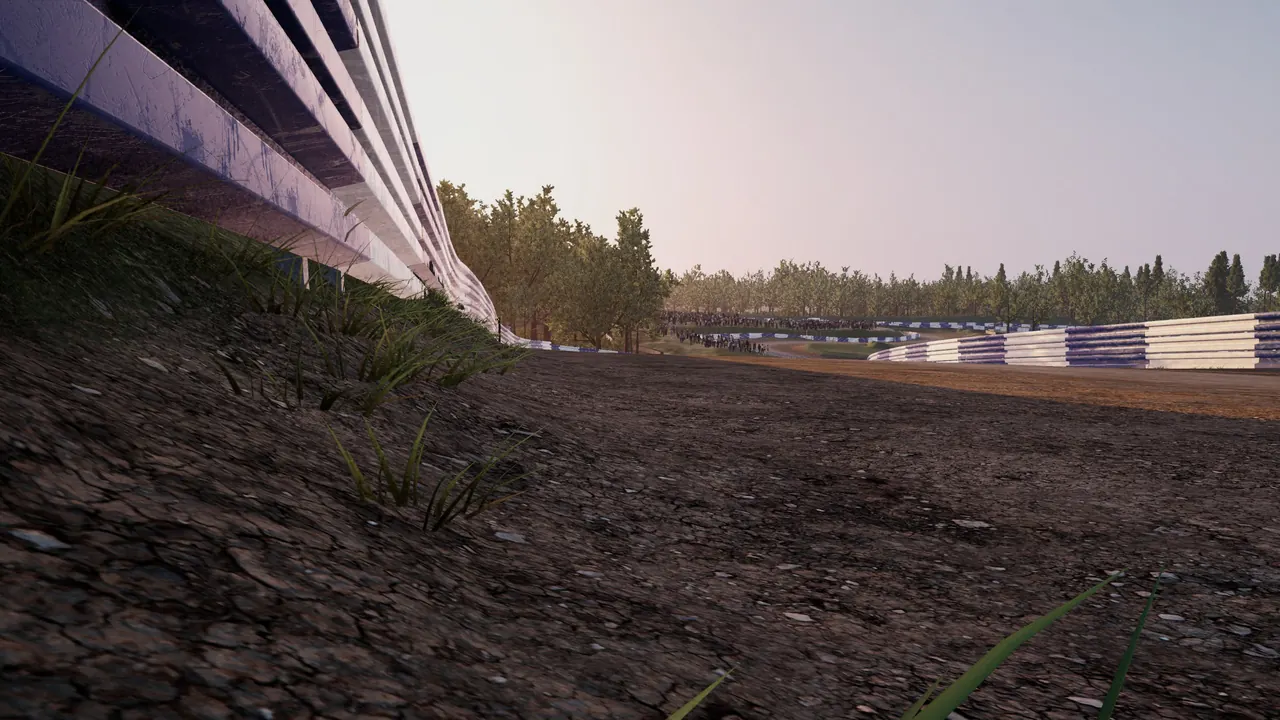
A vehicle dynamics engine written from scratch in Rust, designed from its very first line for dirt as much as for tarmac. The ground gives way, shears, ruts, and remembers.
Illustrative chart, based on the engine's orders of magnitude: ~1.1 g on tarmac, ~0.7 g on gravel, 0.47 g on grass.
A flexible ring of 36 segments and 3 ribs, carrying thousands of bristles that deform in contact with the ground. Self-aligning torque and pneumatic trail emerge from the geometry: nothing is faked.
Physics step on its own thread. If the frame rate drops, the physics doesn't.
Inside the tyre and steering column: test-bench rates.
Ruts in gravel, with raised edges. 100 mm in snow. The tyre feels the edge.
Tarmac, rubbered, dirty, dirt, packed, loose, gravel, grass, snow. Blended wheel by wheel.
automated tests, ISO 4138 and 7401 benches, real tyre data. Validated, not "felt".
Deterministic physics across Windows and Linux: the same race, everywhere, to the last bit.
Pillar 02 · Force feedback
Steering modelled after a scientific paper (Pfeffer, 2008): column, torsion bar, rack and power assistance. Your wheel's encoder is inside the loop, 1,000 times a second, in newton-metres.
Behaviour illustration: demonstration traces, not a measurement.
116 wheelbases from 30 brands detected automatically, from direct drive to entry-level wheels. A dedicated mode for weak wheelbases: on a 6 Nm base, +40 to +73% measured readability.
Online
A player books a server and sets up the meeting: venue, class, format, weather, 2 to 16 grid slots. Everything runs on a single server, from first practice to the podium.
Every driver simulates their own car locally, force feedback intact. The server then replays every car bit for bit before publishing the result. A non-compliant car is disqualified.
Lap times use the car's own timestamps. The start lights wait until everyone is in sync. Contacts use your opponent's real mass.
Four reds, then a random 2 to 6 s delay that is never announced. Clutch, throttle and handbrake are live on the grid. Jump start: +30 s.
Official meetings every evening, seasons, speed and safety ratings, licences, and Time Attack with ghosts and verified leaderboards.
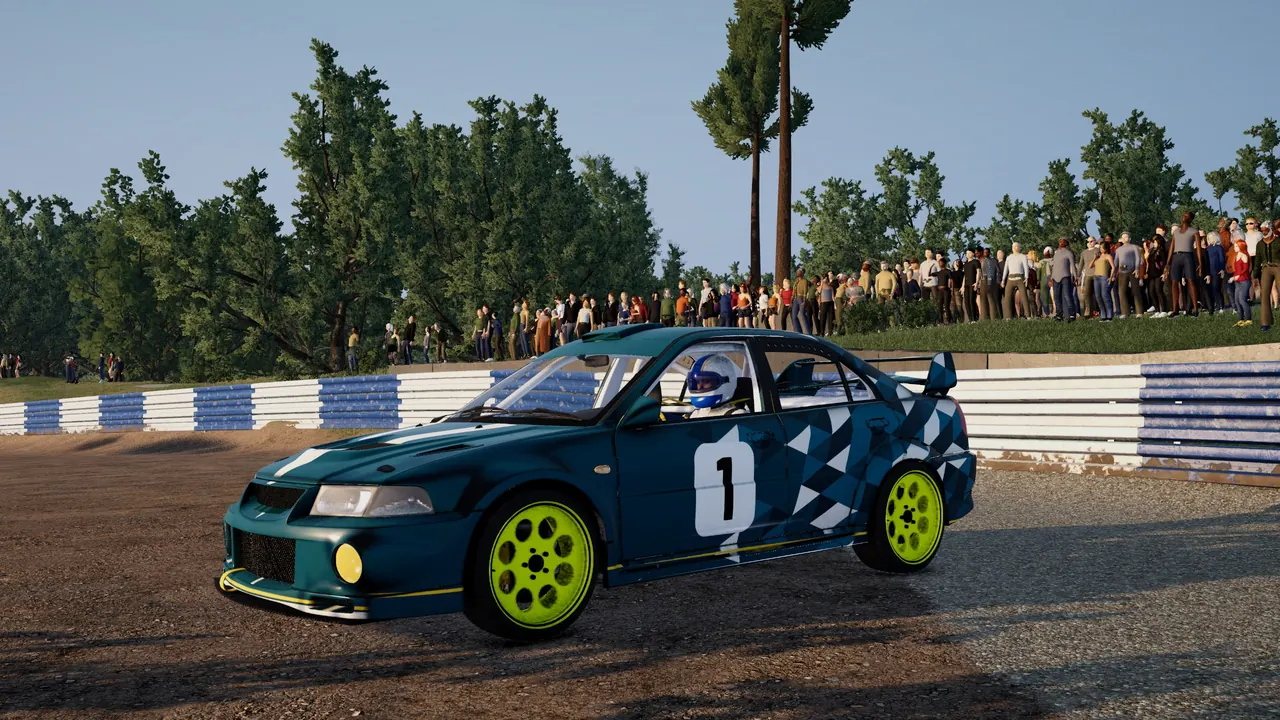
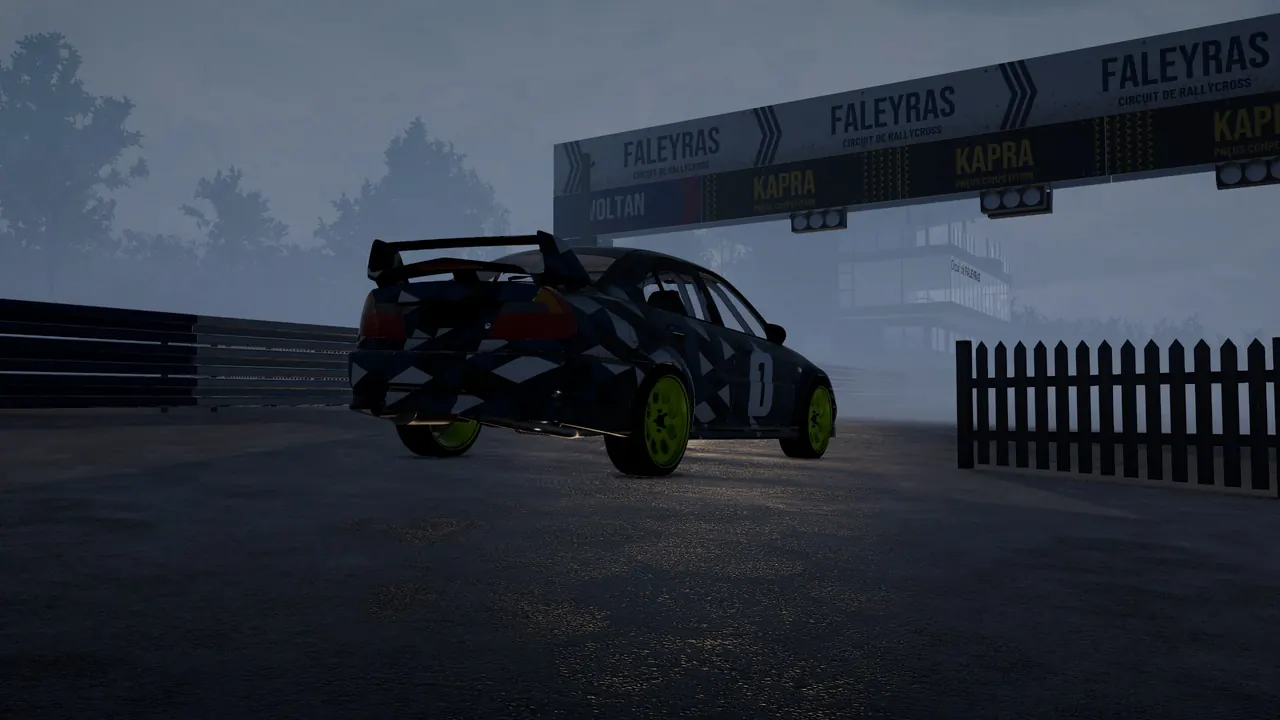
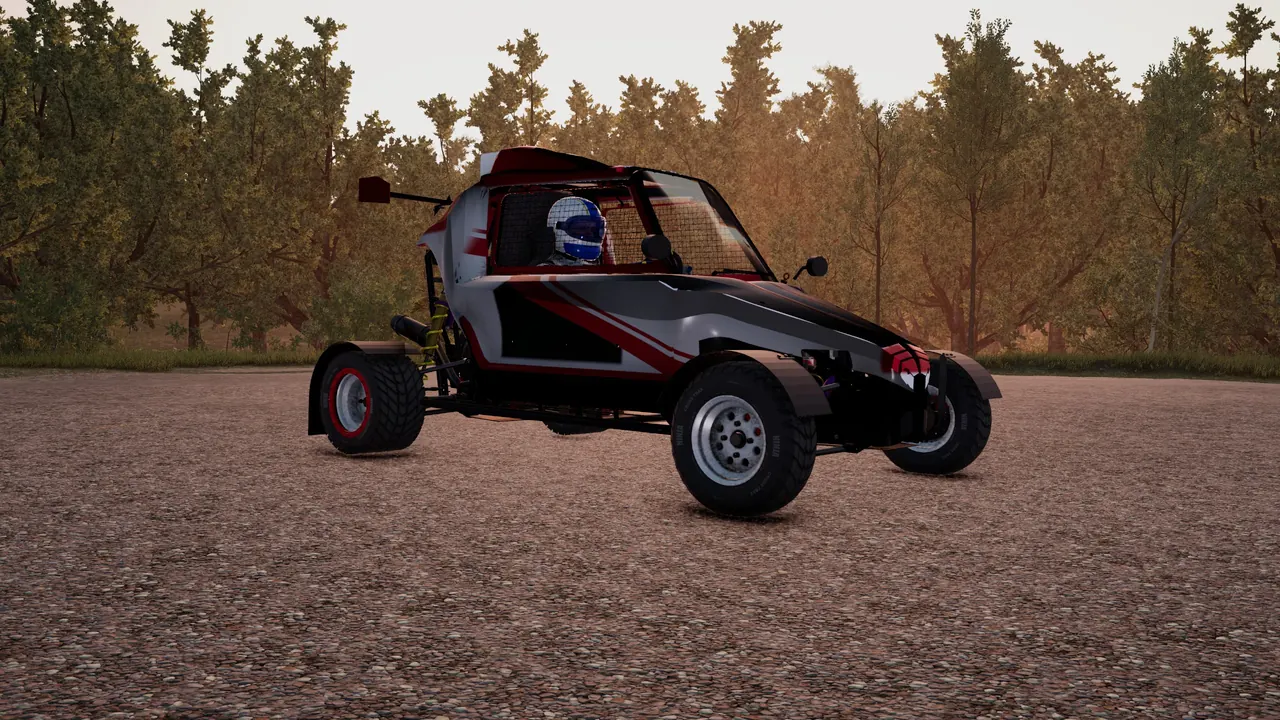
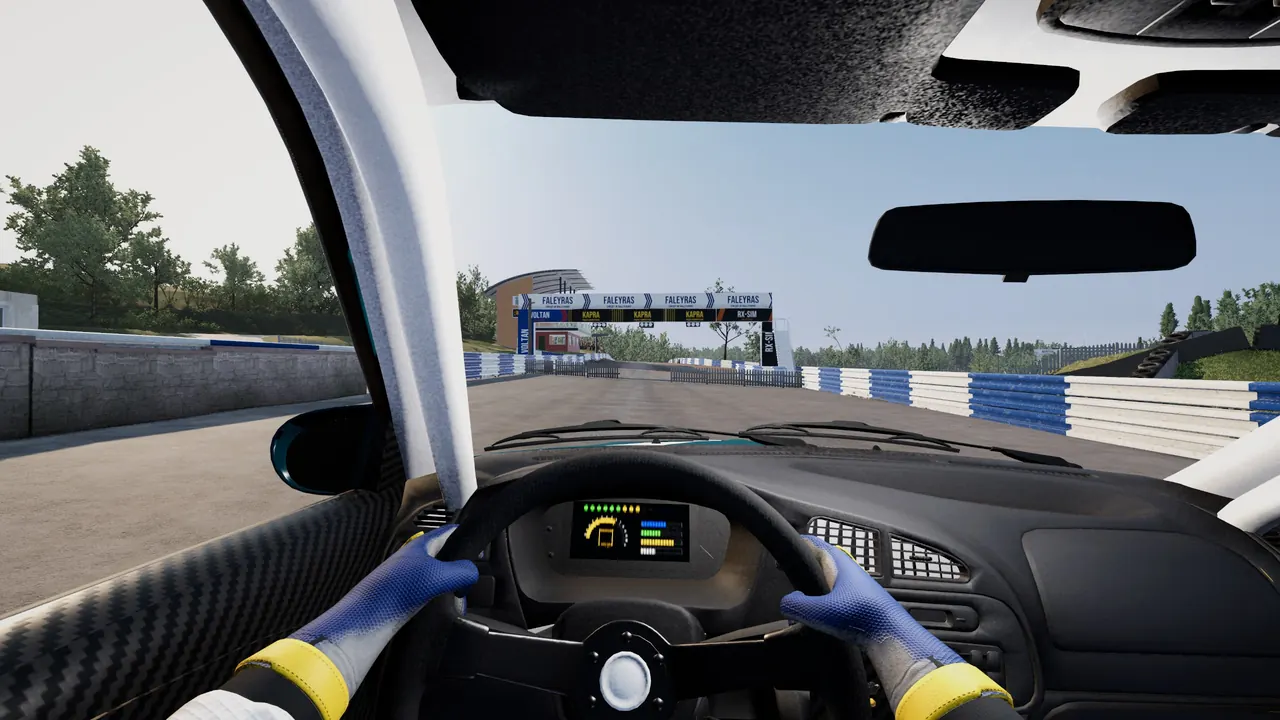
A track that rubbers in and ruts up, cars and barriers dirtied exactly where they're hit, spectators turning their heads as you pass, dynamic sky and weather.
Garage
No performance to unlock or buy. You progress through licences, ratings and trophies, and your car wears your colours.


22 patterns, 4 colour zones, gloss, satin, matte and metallic finishes. Race number, name, wheels, helmet, suit, gloves. Seen by the whole grid online.
Roadmap
FAQ
Xtrack is a PC racing simulator covering rallycross, drift and rally. Its world is generated from real-world public data (LiDAR surveys, aerial and satellite imagery), and its in-house physics engine, NinjaPhysics, is built for dirt as much as for tarmac.
Xtrack is planned for Early Access on Steam, on Windows PC. The date will be announced on this site and on Discord; wishlisting the game is the best way to be notified.
No. Xtrack is designed for force-feedback wheels, but it can be played with a gamepad, with declared driving aids. A wheel is what brings out the force feedback in newton-metres.
Xtrack automatically recognises 116 wheelbases from 30 brands, including Fanatec, Moza, Simagic, Simucube, Logitech, Thrustmaster and DIY bases. Any other DirectInput wheel works with manual torque setup, and a dedicated mode brings out detail on weaker bases.
Yes. Venues such as the Faleyras rallycross circuit in France are rebuilt from LiDAR and 20 cm aerial photos: terrain, surfaces, every tree and vine row. The same pipeline can turn any place into a drivable area.
Yes. The in-game Workshop lets you generate real-world tiles, refine them, and create events on them: rallycross circuits carved into the terrain, rally stages on real roads, drift zones. Public sharing of events is on the roadmap.
Yes. Players can host full rallycross meetings online for 2 to 16 drivers, with heats, semi-finals and a final on dedicated servers. Official scheduled meetings, seasons and ratings are on the roadmap.
No. Xtrack is a premium game: no subscription, no loot boxes, and no performance to buy or unlock. Every car in a class is equal.
VR runs through OpenXR (validation on headsets is in progress), triple screens use proper geometric projection, and telemetry goes to SimHub natively and to motion rigs through DiRT Rally 2.0 compatible output.
"No physics engine did what dirt demands. So I wrote one. Then I wrote the world around it."
Early Access on Steam. Wishlist Xtrack and join the Discord for playtests.